Children’s teeth and jaws develop as they grow. However, some children experience dental alignment or bite problems that may require professional attention. These issues are not always easy for parents to recognise, especially during the transition from baby teeth to permanent teeth.
Identifying early signs of orthodontic problems in children can help parents seek timely advice. Problems such as crooked teeth, overcrowding and jaw misalignment may affect how a child bites, chews and maintains oral hygiene.
Orthodontic treatment for children can address various alignment and bite issues. However, not every child needs braces or other orthodontic appliances. Knowing the common warning signs can help parents understand when to arrange an orthodontic assessment.
10 Warning Signs Your Child May Need Orthodontic Treatment
Several signs may indicate that a child’s teeth or jaws are not developing as expected. Here are some common signs your child needs braces or may benefit from an orthodontic evaluation.
1. Crooked or Misaligned Teeth
Crooked or misaligned teeth are among the most noticeable orthodontic problems in children. You may notice that some teeth overlap, rotate or grow at unusual angles.
Permanent teeth may also emerge in positions that do not align properly with the surrounding teeth.
Mild misalignment does not always require immediate treatment. However, significant crowding or irregular positioning can make brushing and flossing difficult. An orthodontist can assess the alignment and determine whether treatment is necessary.
2. Crowded Teeth or Lack of Space
Dental crowding occurs when there is not enough space in the jaw for all the teeth to fit properly. As a result, teeth may overlap, twist or emerge outside their usual positions.
Crowded teeth in children can make it harder to clean between teeth, increasing the risk of plaque build-up and tooth decay. In some cases, an orthodontist may recommend early intervention to manage spacing and guide developing teeth.
3. Overbite or Protruding Front Teeth
An overbite occurs when the upper front teeth extend too far over the lower front teeth. Some children also have noticeably protruding upper teeth, which may increase their risk of dental injuries.
A significant overbite can affect the way the teeth meet when biting. It may also make certain activities, such as eating, uncomfortable.
An orthodontist can assess the severity of the problem and determine whether early orthodontic treatment may help correct the bite.
Read More: When Should Your Child First See an Orthodontist?
4. Underbite or Crossbite
An underbite occurs when the lower front teeth sit in front of the upper front teeth. A crossbite happens when some upper teeth bite inside the lower teeth rather than outside them.
Both conditions can affect how the upper and lower jaws fit together. If left unassessed, certain bite problems may contribute to uneven tooth wear or difficulties with biting.
Parents who notice these issues should arrange an orthodontic evaluation to assess their child’s bite and jaw development.
5. Open Bite or Gaps Between Upper and Lower Teeth
An open bite occurs when the upper and lower front teeth do not touch when the back teeth are closed. This can create a visible gap between the front teeth.
Prolonged thumb-sucking, pacifier use and tongue thrusting may contribute to an open bite in some children. The condition can affect biting and may also be associated with speech difficulties.
An orthodontist can identify the possible cause and recommend suitable treatment based on the child’s age and dental development.
6. Difficulty Chewing or Biting Food
Children who regularly struggle to bite or chew food may have an underlying bite problem. You may notice that your child avoids certain foods, chews unevenly or has difficulty biting into firm foods.
These difficulties can sometimes be linked to bite problems in children, including misaligned teeth or jaw positioning. An orthodontist can examine the bite and identify whether alignment issues are contributing to the problem.
7. Early or Late Loss of Baby Teeth
Baby teeth play an important role in guiding permanent teeth into their correct positions. Losing them too early or retaining them longer than expected can sometimes affect how permanent teeth develop.
Premature tooth loss may cause neighbouring teeth to shift into the empty space. This can reduce the room available for permanent teeth. An orthodontist can assess the situation and determine whether monitoring or a space maintainer is necessary.
Read More: What Is the Difference Between a Dentist and an Orthodontist?
8. Persistent Mouth Breathing or Thumb-Sucking
Prolonged thumb-sucking and other oral habits can influence dental development. For example, frequent thumb-sucking may contribute to an open bite or protruding front teeth.
Persistent mouth breathing may also be associated with changes in dental and facial development. However, it can have several underlying causes, including nasal obstruction. Parents should discuss these habits with a dentist or orthodontist to determine whether further assessment is needed.
9. Jaw Shifting, Clicking or Uneven Facial Appearance
A child’s jaw should generally move smoothly when opening and closing the mouth. If the jaw shifts to one side during biting or appears uneven, it may indicate an alignment issue.
Persistent jaw clicking, discomfort or noticeable facial asymmetry should also be assessed. These symptoms do not always indicate an orthodontic problem, but a professional examination can help identify the cause.
10. Speech Difficulties or Frequent Cheek Biting
Some dental alignment problems can affect how children pronounce certain sounds. An open bite or other irregularities may interfere with tongue placement during speech.
Frequent cheek or palate biting can also occur when teeth do not meet properly. If these problems continue, an orthodontic assessment can help determine whether tooth or bite alignment is contributing to them.
At What Age Should a Child See an Orthodontist?
Children should have their first orthodontic check-up by age seven. At this stage, a combination of baby and permanent teeth allows an orthodontist to identify potential developmental concerns.
However, an early examination does not mean every child needs braces. Some children may require treatment, while others only need regular monitoring as their teeth and jaws develop.
What Are the Orthodontic Treatment Options for Children?
The appropriate treatment depends on the child’s age, dental development and specific alignment problems.
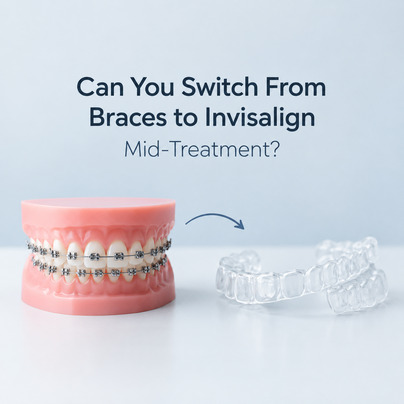
- Traditional braces: Metal brackets and wires gradually move teeth into better positions. They can address several alignment and bite problems.
- Ceramic braces: These work similarly to metal braces but use tooth-coloured brackets for a less noticeable appearance.
- Invisalign First: This clear aligner system is designed for younger children with developing teeth. It can address selected spacing, crowding and bite concerns.
- Other orthodontic appliances: Palatal expanders and space maintainers may help address specific developmental or spacing problems.
Invisalign vs. Traditional Braces: Which Is Better for Children?
Invisalign for children offers removable, nearly invisible aligners, while traditional braces remain fixed to the teeth. Clear aligners can make brushing and eating easier, but children must wear them as instructed.
Traditional braces may be more suitable for children who need more complex tooth movements or may struggle to follow aligner-wearing instructions.
Neither option is suitable for every child. An orthodontist can recommend the most appropriate treatment after examining the teeth and bite.
Final Thoughts
Every child’s dental development is different. Some alignment issues may require early attention, while others only need regular monitoring. Parents should pay attention to changes in their child’s teeth, bite and jaw development.
If you notice any unusual signs, consult a qualified orthodontist for an assessment. A timely evaluation can help determine the most appropriate approach to support your child’s long-term oral health.
Book Your Child’s Orthodontic Consultation at Visage Orthodontics
Concerned about your child’s teeth or bite? Visage Orthodontics in Aberdeen is here to help.
Book a consultation with our team to assess your child’s orthodontic needs.
Get in touch with Visage Orthodontics and take the first step towards a healthier smile.
Frequently Asked Questions
No. Some children can benefit from early orthodontic treatment while they still have baby teeth. The timing depends on their dental development and specific orthodontic needs.
Not always. Tooth extraction may be recommended in cases of severe crowding, but the orthodontist will assess other treatment options before making this decision.
Yes. Children can continue playing sports during orthodontic treatment. A suitable orthodontic mouthguard is recommended for contact sports to protect their teeth and braces.
Yes. Retainers help keep teeth in their corrected positions and prevent them from shifting. The orthodontist will advise how often and how long they should be worn.
Yes. Eligible children under 18 may receive NHS orthodontic treatment in Scotland, depending on clinical need. Eligibility is assessed using specific orthodontic criteria.